Tied in a Single Garment of Destiny
“All [people] are caught in an inescapable network of mutuality, tied in a single garment of destiny. Whatever affects one directly, affects all indirectly.”
— Martin Luther King Jr., Letter from Birmingham Jail (1963)
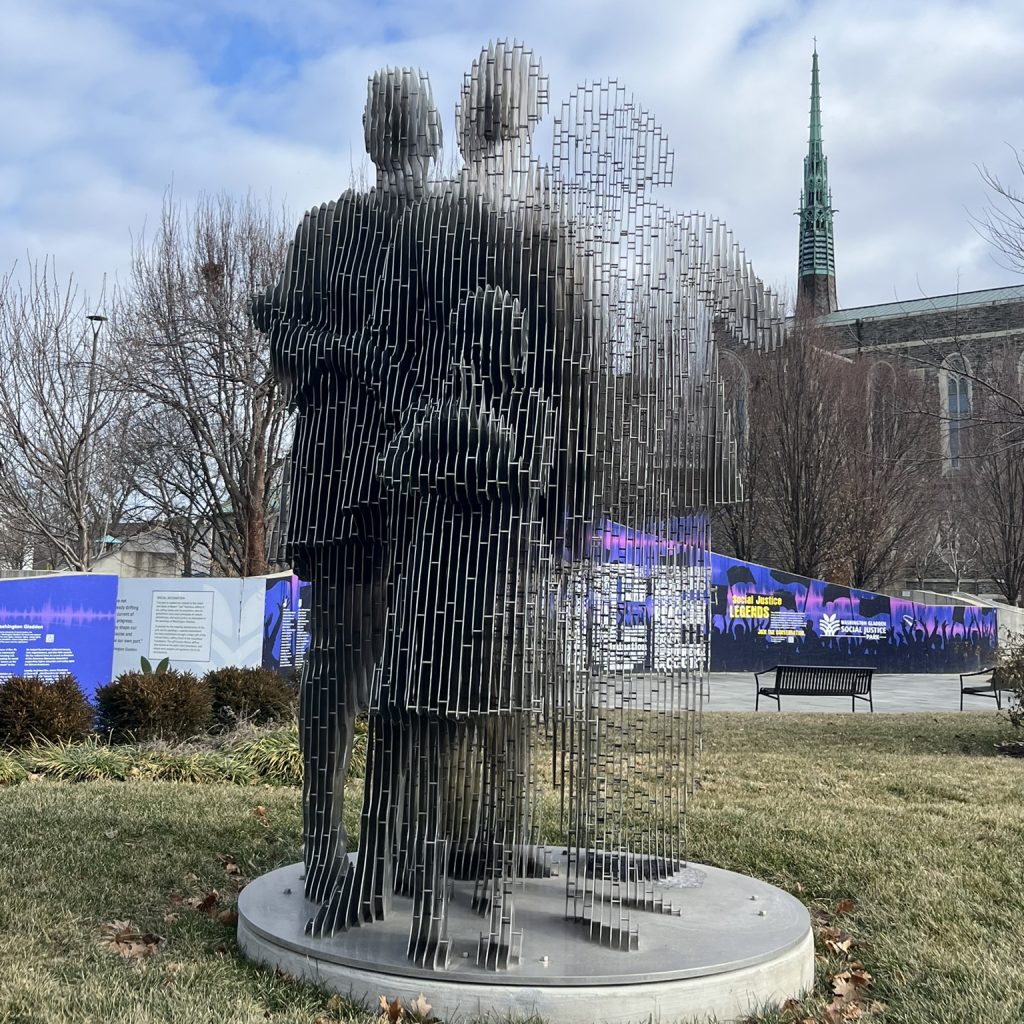
These words from Rev. Dr. Martin Luther King Jr. inspired one of the most visible works within Washington Gladden Social Justice Park: Our Single Garment of Destiny.
Dedicated on Martin Luther King Jr. Day in 2021, the sculpture serves as a gateway not only to the park, but to the Creative Campus arts district in downtown Columbus. Its name comes directly from King’s reflection on mutual responsibility and the idea that our lives are interwoven, whether we acknowledge that connection or not.
King wrote the Letter from Birmingham Jail while imprisoned in 1963. Drafted on scraps of paper in response to white clergy who urged restraint and patience, the letter articulated a moral argument: justice cannot be postponed without consequence because injustice affects us all.
That moral vision takes physical form in the sculpture designed specifically for the park by artists Adriana and Julian Voss-Andreae. The artists recruited models active in social justice work in their hometown of Portland, Oregon, and used a precise “slicing” engineering method to construct the piece.
Visitors approaching the park first see what appear to be solid steel figures standing together. But as one walks past, the sculpture begins to visually disintegrate. From certain angles, it nearly disappears altogether.
The effect is intentional.
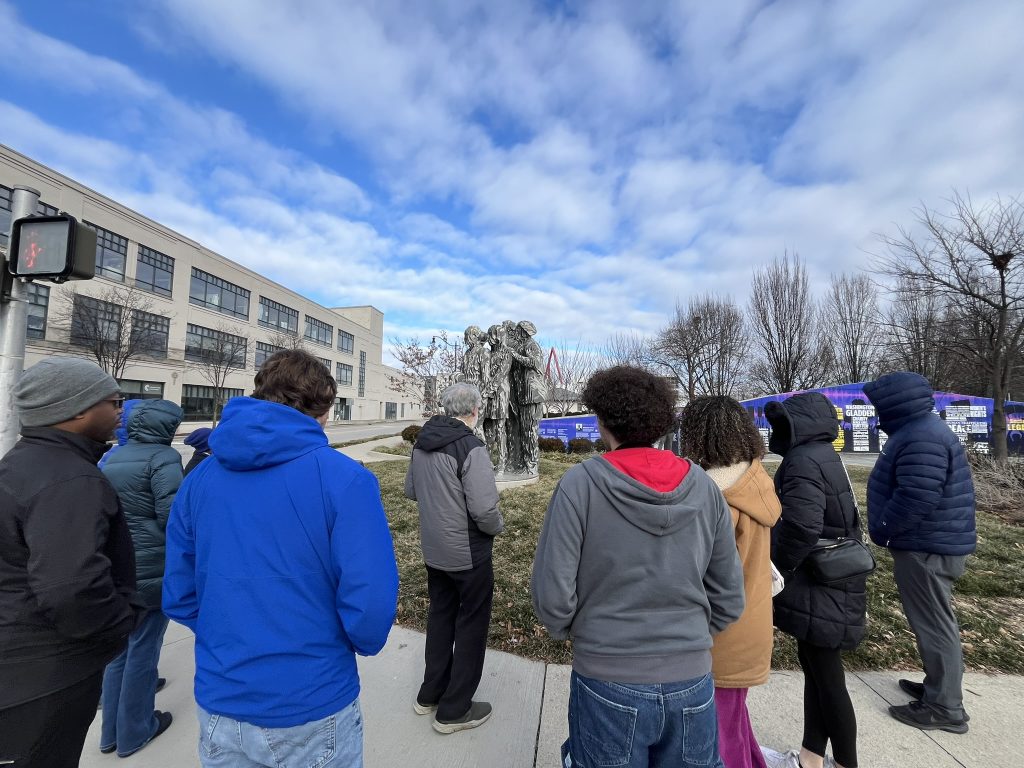
In January, a group of young people gathered at the sculpture to study King’s letter. Standing before the artwork, they discussed the concept of mutuality and the responsibility we bear toward one another. As they moved around the sculpture and watched it vanish from view, several students reflected on how individuals and communities can also feel invisible — present, yet unseen — depending on perspective.
The sculpture invites layered interpretation. It can suggest that social justice requires diverse people to come together in shared purpose. It can point to the reality that many in our community face significant obstacles and may feel overlooked or unseen. And it can simply prompt a question: how does our vantage point shape what and who we notice?
Public art in Washington Gladden Social Justice Park is not decorative. It is interpretive. It invites reflection rather than conclusion.
The youth class at Our Single Garment of Destiny offered a living example of the park’s purpose: a place where history, art, and thoughtful conversation meet and where each visitor is invited to consider what the sculpture means to them.
The artwork was made possible through the generous support of the Crane Family and Crane Group, Inc.